All text copyright Stephen Coates 2006 - 2015

F***ING LONDON!

The tower seen between the railings in the top picture is the priapic lump of open-plan office space called 'The Shard" which is jack-booting its way across an historic part of the city.  Already it has partially destroyed the wonderful Victorian Vaults below London Bridge station and evicted the Shunt arts collective that had been occupying them.  For several years, Shunt presented an amazing range of work and events to the delight of many Londoners.  I played there several times myself.  But the grey men came with a piece of paper which said it had all got to stop.  After just having been taken brutally from behind by the banking sector to the tune of several billion, it seems strange we're now letting their property developer friends do it again in Borough.  Mind you this part of the city has never been averse to vice. The railings in the picture and the 'offerings' seen in the lower photo are in the "Crossbones Graveyard" in Redcross Street
This is the site of the burial place of 'The Outcast Dead' - persons who were not considered fit to be buried within the boundary of the historical city of London.  So basically this is where all the prostitutes, suicides and pagans went.


The prostitutes were known as 'Winchester Geese' because they were licensed by the Bishop of Winchester who owned and officiated the land hearabouts.  He did this so that the pious burghers north of the river could legally hop over and get their leg over.  They got laid, he got paid.  Yes, it's completely true I am afraid.  After an often short and painful life of servicing the good citizens, the 'single women' could be buried here as the ground was unconsecrated.  And up to 15000 of them were by the mid eighteenth century.


Thanks largely to writer John Constable and others, the site, at present a scruffy piece of concrete waste-ground, is commemorated with regular events. The next is at Halloween.  It is hoped that a permanent memorial garden will be created there - well, if the greedy hands of the property developers can be kept off it that is.

THE CITY RE-CYCLED

There are bikes everywhere in London now.  If you are not from here, it is because there is a new amazing scheme of thousands of public cycles for anyone to use. It's really wonderful.

Speaking of which, back in March last year, I posted about this kid's bike we saw leaning against the river wall down on the foreshore at very low tide. The other day I was surprised to see it still there.  I don't know why I should be - it looks like it is from the seventies and may have stood there since in spite of a hundred thousand tides.  I like the polite way it is parked against the wall - almost as if its young owner has just popped off to do something - a wee perhaps - and will be back in a minute.  

Well, they never did come back - or haven't yet.

For absolutely no apparent reason, apart from general musing on time passing, this reminded me of one of my favourite quotes.  It is by Orson Welles from 'F for Fake' (surely one of the greatest of his forgotten films).  It always cheers me up:

"Our works in stone, in paint, in print are spared, some of them, for a few decades or a millennium or two, but everything must finally fall in war, or wear away into the ultimate and universal ash - the triumphs, the frauds, the treasures and the fakes. 

A fact of life: we're going to die. 

"Be of good heart," cry the dead artists out of the living past. 
"Our songs will all be silenced, but what of it? 

"Go on singing!""

UNQUIET SLUMBERS

I started this blog over five years ago with an account of a visit I paid to the lost River Fleet.  London's subterranean waterways have remained an obsession.  I don't know why.

Here is a picture of the gate which guards one of the mouths of another river, the Tyburn, under Westminster.  It's very difficult to get in there now - it flows beneath Buckingham Palace so I suppose they are very concerned about terrorists getting access to the Queen's loo.

Seeing it yesterday reminded me of the sewermen I met when I visited the Fleet.  A couple of them were quite old then and must have retired now I am sure.  They had spent all their working life roaming the vast underground labyrinths of London and had a knowledge of the system which had been passed down verbally for over a hundred years by those who preceded them. This knowledge could not be written down and will be lost when they are gone -  the privatised Thames Water company have stopped recruiting the necessary apprentices for the usual cost and profit reasons.

It must have been a strange and difficult job - and one with a kind of lineage back to the 'mudlarks' and 'toshers' described by Stow in his 'Survey of London'.  These were the hereditary 'guilds' of professional scavengers who trawled the Thames foreshore and the city sewers for valuable items (including dead bodies which could be sold to surgeons for dissection).

I asked the oldest sewerman what was the spookiest thing he had found underground  - expecting some horror story of vicious rats or mangled bones.  He told me that he seen many strange things but the one that haunted him still was the memory of the time he turned a corner into some subterranean chamber far below the Strand and discovered a perfect Victorian cast iron double bed-stead standing there in the darkness.  This otherwise innocuous domestic object was made so strange by the fact that there was no hole anywhere big enough for it to have fallen in.

In other words, somebody had taken it in gradually in pieces and for heaven-alone-knows-what-reason re-erected it there on purpose.

FACE LIFT

The Temple church is one of the oldest - and oddest - in London.  It used to also be one of the quietest until Dan Brown featured it in The Da Vinci Code.  It is now often  besieged by groups of slightly baffled looking visitors clutching his book.  It is easy to be snobby about such things but in actual fact the environs of the church - the courtyards and alleys of the Middle Temple are wonderful for everyone.  I particularly like the sombre message on the sundial in Pump Court:

"Like shadows we are and like shadows depart!"

Very appropriate in a country where you can only use a sun dial about ten days a year.

Sitting by the pool in Fountain court as the Autumn leaves are falling is a happy thing.  It is the spot in Dickens's Martin Chuzzlewit where John Westlock declares his love for Ruth Pinch:

"Brilliantly the Temple Fountain sparkled in the sun, and laughingly its liquid music played, and merrily the idle drops of water danced and danced, and, peeping out in sport among the trees, plunged lightly down to hide themselves, as little Ruth and her companion came towards it."


One thing that the Da Vinci tourists and Dan Brown (though not Dickens) miss of course is that the ancients had a rather well defined sense of humour.  These images are some of the caricatures and grotesque gargoyles sprinkled amongst the saints and general worthies within the church.


STRANGE FRUIT

Last week marked the 70th anniversary of the night the Luftwaffe began to firebomb London into the dust.  Clerkenwell remained generally unscathed but St Pauls was left like an ocean liner sailing a sea of ruin. Despite the preposterousness of the War on Terror, for this reason if no other it's difficult to be a complete pacifist. So on Sunday we went to the tiny but magnificent St Clement Danes, the Christopher Wren Royal Air Force church on Fleet Street, itself a restored victim of the Blitz.

In fact the church is actually probably most famous for having the bells mentioned at the beginning of the children's nursery rhyme "Oranges and Lemons".  Like Cock Robin, this poem always struck me as a rather haunted thing with those two sinister closing lines - a feeling only re-inforced by its presence throughout Orwell's 1984.  That book was of course written in the aftermath of the London's near destruction and with St Clements just a little way from the BBC's Bush House where Orwell was once a radio announcer.

The Blitz was  one of the times when the battle for the London Stone was nearly lost.  Which event provoked which I wonder? Anyway, here is the rhyme  and the bells ringing at midday on Sunday for the fallen fighters of the air who saved the day and what remains to us of the lost city.


ART OF DARKNESS

My friend Catherine Anyango who you may know as the designer of The Real Tuesday Weld artwork and maker of wonderful films such as this has just had her first book published.  It is a graphic novel version of Conrad's Heart of darkness and it is very, very good.

I confess I haven't read the original novel myself - just couldn't make headway up that awful river but I feel as if I know it through repute and because of Apocalypse Now.  So, it has been a pleasure - albeit a dark one - to read it now in this way.

I really recommend it - as do several other people.  Antique Beat has a limited number of first edition copies signed and dedicated by Catherine.


TIGERS IN ST PETERSBURG


It feels like I have known The Tiger Lillies for a very long time.

I first met Martyn and Sophie in London not long before they were burned out of their Soho flat by an unscrupulous landlord. He was bent on getting rid of them and claiming the insurance.  We had been together in the country for the weekend and returned to the city on the Sunday evening.  I said goodbye to them but heard by phone-call later that they had lost everything - clothes, photographs, instruments and all the music they had recorded for years.  All gone up in smoke.  The weekend had been a Buddhist retreat so I suppose it was a brutal practical lesson in permanence

It actually kind of turned out all right in the end and the band have gone from strength to strength since despite being largely ignored by the music press and industry (well, in the UK at least) - a fact I feel a certain resonance with.

Strangely, we have never shared a bill until this weekend in
St Petersburg.  That was very nice and I do hope we can do so again someday.  Oh and that reminds me, here is the original of the song 'Someday' that Martyn recorded for me a few years ago. 

Quite wonderful and I hope you enjoy it.

They are a very stylish band and very nicely turned out indeed so it was an aesthetic pleasure too.  And it was also wonderful to be back in Russia with our old friends there and to make some new ones. St Petersburg is such a beautiful city.  It is built on a marsh and I heard that the gas that is still released from beneath the surface is addictive and so people keep returning.  I can believe it.

If you were at the show and witnessed the ritual massacre of the great pink elephant, I salute you.  

CHILD ROWLAND TO THE DARK TOWER CAME

This sinister object is a Victorian water tower in the back streets of Kennington.  It is one of the few remains of The Lambeth Workhouse where children were "taught to read but not write" and where Charlie Chaplin spent part of his childhood.  The childen would have seen it from a window in their dormitory.

It also appeared in the strange short film "The Black Tower' where a tower seems to follow the narrator around London.

I think I know that feeling.

AN ENGLISH ASSASSIN

Only one British prime minister has been assassinated (although, perhaps understandably, there have been several attempts on the lives of others).  In 1812 John Bellingham shot Spencer Perceval through the heart in Westminster.  I am not particularly political by nature but Bellingham was a local.  He lived in Millman Street and had his best coat adapted by another local - Mr Taylor of Guildford Street - with a special pocket to conceal a pistol.

At first thought to be a radical, it turned out that he was apparently just disgruntled.  I say 'apparently' because there is a third more sinister version of this story but at his trial he was said to have held the prime minister responsible for a series of collective wrongs, neglect and abuses by the government which had ruined many lives.  (The continued heavy police presence around teflon Tony Blair's luxury London lair might suggest that people could still feel that way).

He languished just south of Clerkenwell in Newgate prison briefly before being hung there at the gates on 18 May.  He was cleanly shaved, impeccably turned out and, as Samuel Pepys had said of another condemned prisoner:


'As cheerful as a man could be under such circumstances'.


Newgate was probably the most feared building in the British Empire.  It stood in various incarnations for almost a thousand years and was a terrifying temporary home to a vast range of characters - saints, sinners, heros and villains, real and imagined.  Countless innocents died there in addition to the guilty - disease taking many before the executioner could. It finally was brought down at the beginning of the twentieth century.  All that survives of it now apart from folk memory and some inherited language is a stretch of wall in a very private garden.  I managed to make it a visit courtesy of my new friend the wife of the Dean of St Pauls.  It is so tranquil there now it is almost impossible to imagine the horrors that went before or to realise what may still lie beneath the flowers.

The clothes of the executed were by ancient perogative awarded to the hangman and could be sold on for considerable sums due to their curiosity and alleged curative value.  I saw a 'Bellingham's Cravat' for sale a couple of years ago in an old shop on Lambs Conduit street.  The shop is now gone but if you ever come across the cravat do let me know.

MAYBE THIS TIME

I am slightly ashamed to confess that I only saw the film Cabaret for the first time about three years ago.  I had always been put off by the theme song 'Life is a Cabaret' - a staple of of bad end-of-the-evening karaoke sessions and sad end-of-the-pier crooners.  Once seen however, never forgotten.  The music, the lyrics, the routines, the acting and the clothes are all genius of course but also there is the sadness and the sense of impending doom. Plus there is monkey song scene "If you could see her through my eyes" which simultaneously manages to articulate a very poignant expression of true love  - and be one of the funniest routines ever committed to film.  
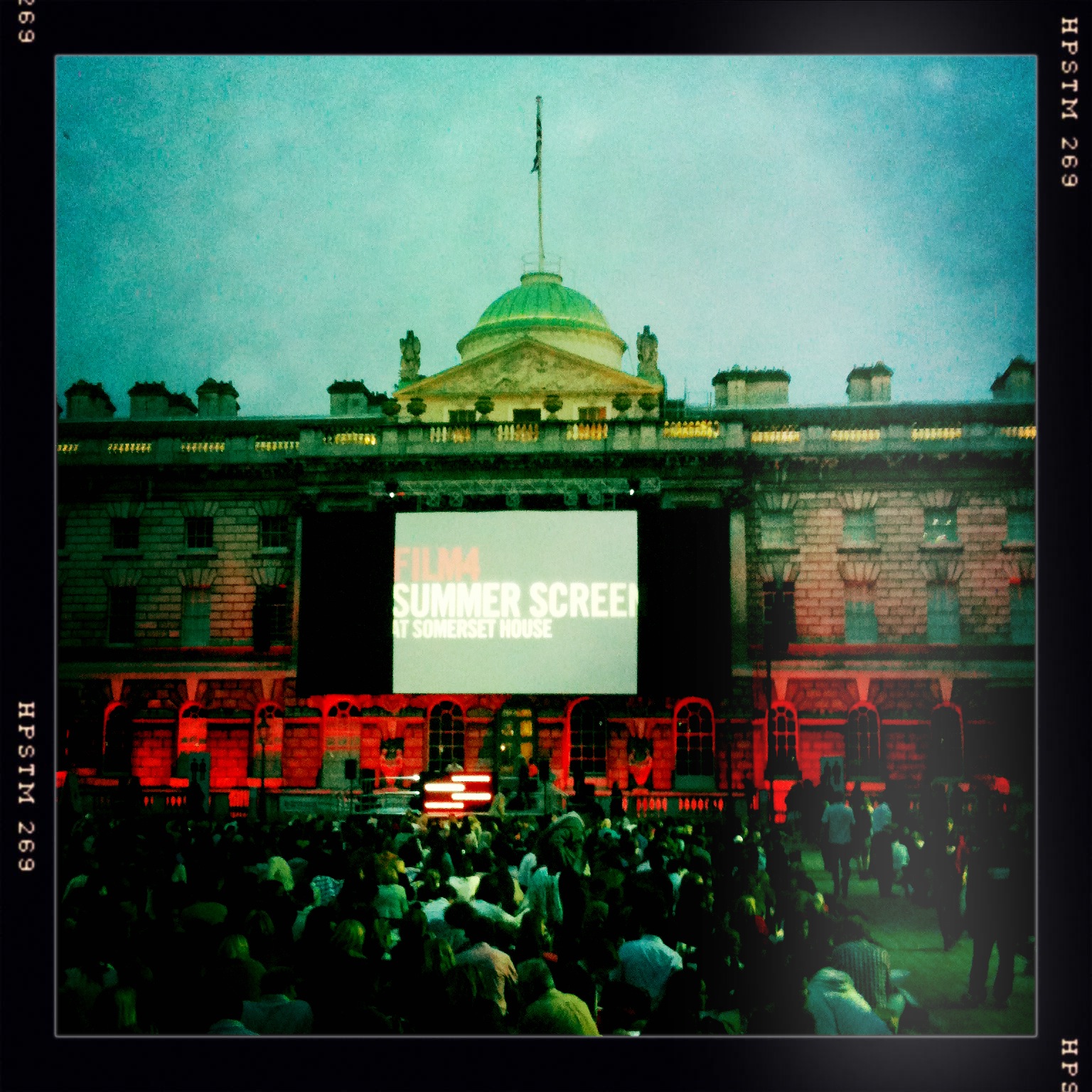
It was a great pleasure to DJ before the showing of the film on Thursday at the beautiful Somerset House.  How often is it possible to play Kurt Veil, Tom Waits, Berthold Brecht and Lotte Lenya and get away with it never mind be egged on?  
I am now looking for a knitted pattern tanktop so I can be as elegant as Michael York.  In an ideal universe I suppose I would be a combination of him and Joel Grey whose turn as the MC of the Kit Kat club is simply jaw dropping.  
This film beat The Godfather to the Oscar.

Respect.